
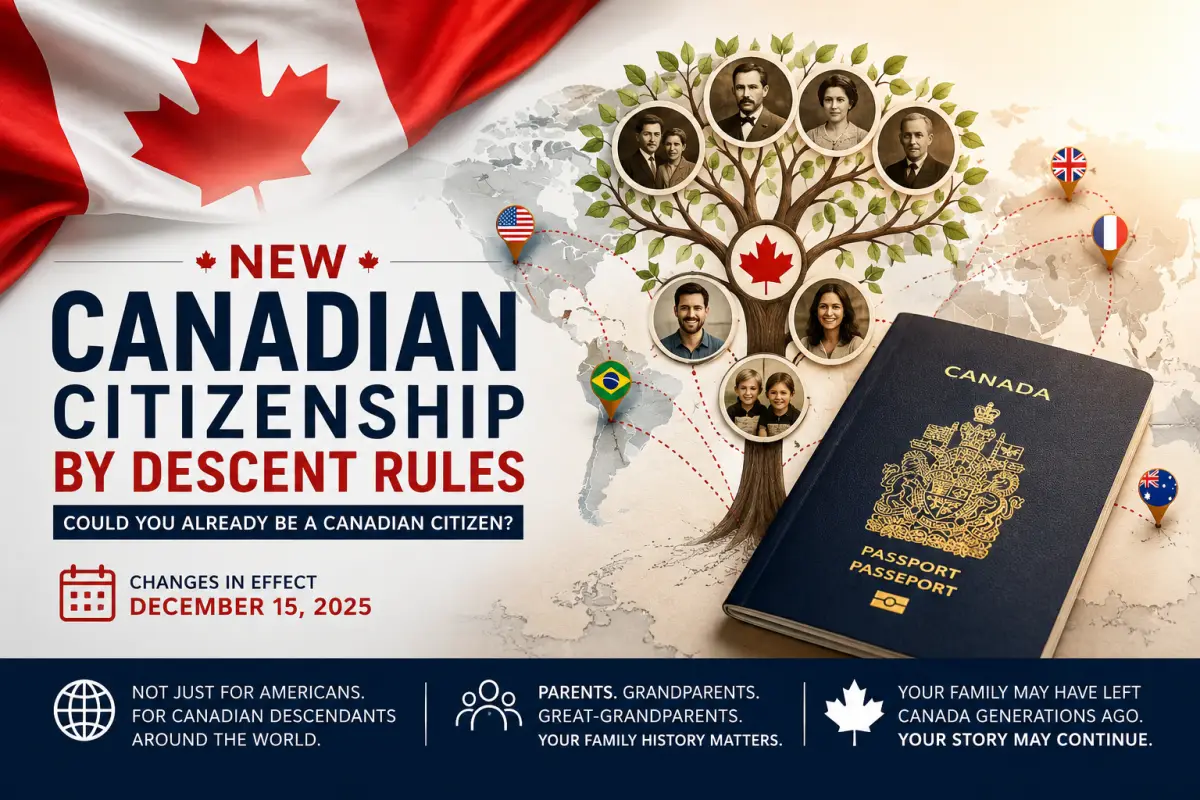

New Canadian Citizenship by Descent Rules: Could You Already Be a Canadian Citizen?
Have a Canadian Parent, Grandparent or Canadian Ancestor? Canada’s Citizenship Laws Have Changed and Your Nationality Doesn’t Matter
Were you born outside Canada but have Canadian ancestry?
You may want to take another look at your family tree.
Major changes to Canada’s citizenship-by-descent laws came into effect on December 15, 2025, changing rules that had previously prevented certain people born outside Canada from being recognized as Canadian citizens.
For some descendants of Canadians around the world, the change could be significant.
You may already be a Canadian citizen and not know it.
If you previously researched Canadian citizenship and were told that you were “one generation too far removed,” your situation may deserve a new assessment under the current law.
At One Immigration Consulting, we can help you investigate your Canadian family connection, assess your potential citizenship status, identify the documents required and assist with the process from beginning to end.
What Changed With Canadian Citizenship by Descent?
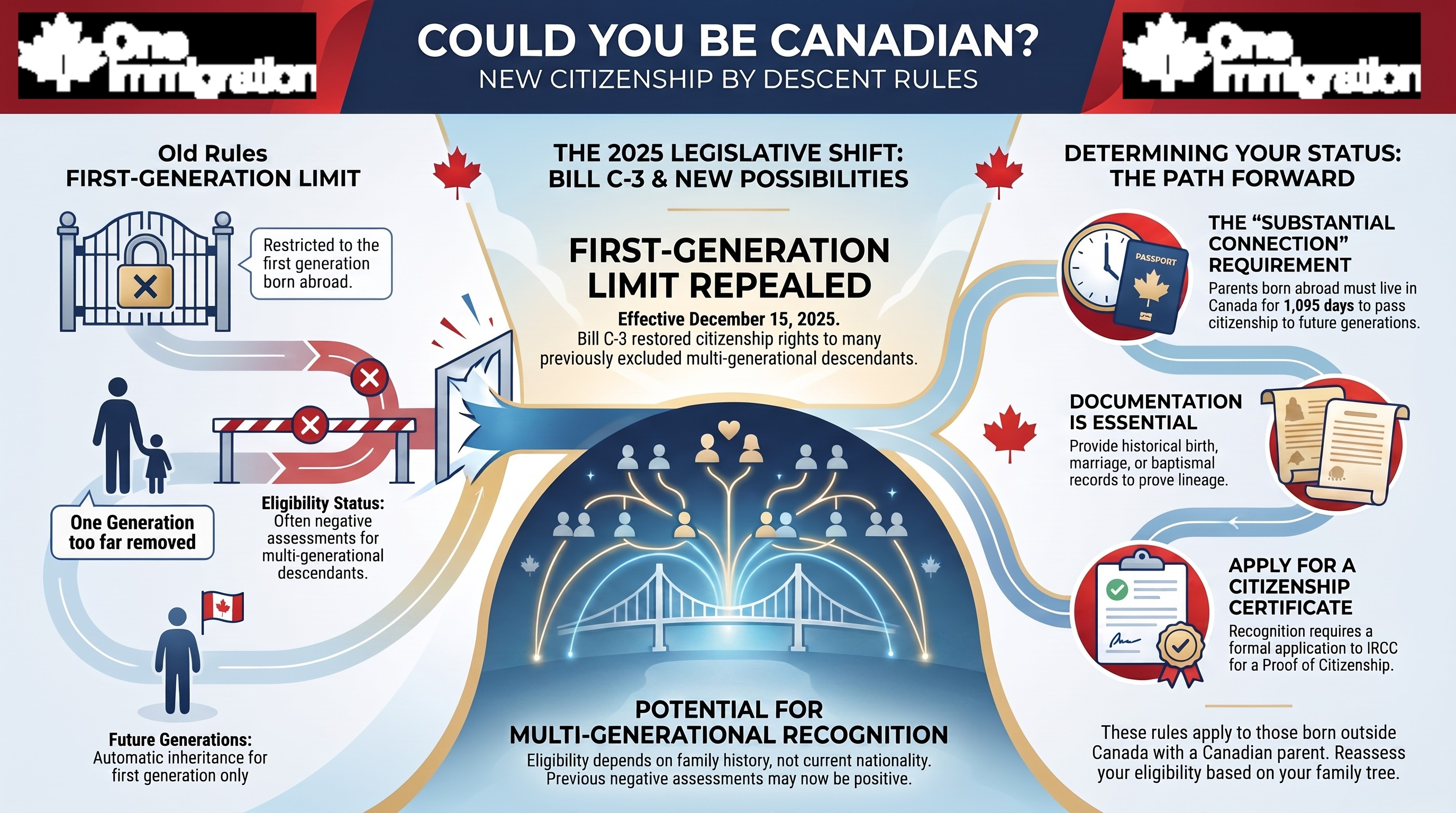
For years, Canada’s Citizenship Act contained what was commonly known as the first-generation limit.
Generally, this meant that a Canadian citizen born outside Canada could not automatically pass citizenship to a child who was also born outside Canada.
This created situations where Canadian citizenship effectively stopped after the first generation born abroad.
That rule affected families around the world.
Canada has now changed the law.
Bill C-3, An Act to amend the Citizenship Act (2025), came into force on December 15, 2025.
The legislation changed the first-generation limit and restored or extended citizenship to certain people who had previously been excluded by older citizenship provisions.
For some families, that means an answer of “No” under the old rules could potentially be different today.
🍁Build Your Canadian Future
Ready to create a solid, flexible citizenship strategy? Get clear, expert guidance tailored to your goals.
Book a Licensed ConsultationStay informed. Apply with confidence.
This Is NOT Just for Americans 🇨🇦🌎This is one of the most important things to understand about the new rules.
Canadian citizenship by descent is not limited to Americans, French Canadians or people living near Canada.
Canadian families have migrated throughout the world for generations.
You could currently be a citizen of the:
🇺🇸 United States
🇧🇷 Brazil
🇲🇽 Mexico
🇬🇧 United Kingdom
🇫🇷 France
🇮🇹 Italy
🇵🇹 Portugal
🇦🇺 Australia
🇦🇷 Argentina
🇨🇱 Chileor another country entirely.
Your current nationality is not, by itself, what determines whether Canadian citizenship by descent may apply.
Instead, the analysis can depend on factors such as:
Who your Canadian ancestor was;
When and where each generation was born;
Whether the relevant parent or ancestor was a Canadian citizen;
How citizenship passed or failed to pass between generations;
Whether an ancestor lost or regained Canadian citizenship under historical legislation; and
Which version of Canada’s citizenship laws applied at the relevant time.
If you have Canadian roots anywhere in the world, your family’s citizenship history may be worth investigating.
Have a Canadian Parent? Start Here.
If you were born outside Canada before December 15, 2025, and your parent was a Canadian citizen when you were born, the changes may be particularly important.
Some people who were previously excluded because their Canadian parent was also born outside Canada may now be Canadian citizens under the amended Citizenship Act.
For example:
🇨🇦 Grandmother born in Canada
↓
🌎 Mother born outside Canada
↓
🌎 Child born outside CanadaUnder Canada’s previous first-generation limit, situations involving multiple generations born outside Canada could encounter restrictions.
The new law changes the analysis for certain people born before December 15, 2025.
Need a Clear Citizenship Strategy?
Skip the guesswork. Map out your path to Canadian Citizenship with a licensed professional.
Book Your Consultation NowStay informed • Stay prepared • Apply with confidence
What If Your Canadian Connection Is Through a Grandparent?
This is where the new rules are generating considerable interest.
Having a Canadian grandparent does not automatically mean you are a Canadian citizen.
However, it can be an important reason to investigate your family’s citizenship history.
Consider:
🇨🇦 Grandfather born in Canada
↓
🇺🇸 Father born in the United States
↓
🇺🇸 Daughter born in the United StatesOr:
🇨🇦 Grandmother born in Canada
↓
🇧🇷 Mother born in Brazil
↓
🇧🇷 Son born in BrazilOr:
🇨🇦 Grandfather born in Canada
↓
🇬🇧 Mother born in the United Kingdom
↓
🇦🇺 Child born in AustraliaThe country changes.
The underlying citizenship question remains.
Was Canadian citizenship transmitted through the generations, or was someone prevented from becoming a citizen because of a rule that has now changed?
That requires examining the family’s specific history.
What About Canadian Great-Grandparents?
Don’t automatically assume that a Canadian connection is too distant simply because it involves several generations.
At the same time, having a Canadian great-grandparent or an even earlier Canadian ancestor does not automatically establish Canadian citizenship.
Multi-generational cases can be considerably more complicated.
For example:
🇨🇦 Canadian great-grandparent
↓
🌎 Grandparent born abroad
↓
🌎 Parent born abroad
↓
🌎 YouThe citizenship status of each relevant generation may need to be established.
Dates become extremely important.
Historical citizenship legislation becomes important.
And documentation connecting one generation to another becomes essential.
This is exactly why families with older Canadian connections should consider a professional assessment rather than assuming they either qualify or don’t qualify.
Why New England Could Be Particularly Important
The northeastern United States provides an excellent example of how extensive Canadian ancestry can be outside Canada.
During the nineteenth and early twentieth centuries, large numbers of French Canadians left Quebec and settled in the United States, particularly in New England.
Many established families in:
Maine • New Hampshire • Vermont • Massachusetts • Rhode Island • Connecticut
Generations later, their descendants may identify primarily as Americans while still having documented Canadian ancestry.
For these families, the starting point may be an old Quebec birth, baptism, marriage or citizenship record.
But the same principle applies around the world.
Canadian descendants can be found throughout the United States, Latin America, Europe, Australia and elsewhere.
What Are “Lost Canadians”?
Another important part of Canada’s citizenship history involves people commonly called “Lost Canadians.”
Over the decades, Canada’s citizenship laws contained provisions that caused some people to lose Canadian citizenship or prevented them from acquiring it even though they had significant connections to Canada.
Previous legislative reforms restored citizenship to many affected people.
Bill C-3 addresses additional people affected by historical citizenship provisions and the first-generation limit.
This matters because your eligibility may depend not only on where your ancestor was born, but also on what their citizenship status was under the law at different points in history.
Previously Told You Weren’t Eligible? Check Again.
This could be one of the most important consequences of the new legislation.
Perhaps you investigated Canadian citizenship several years ago and were told:
“Your Canadian parent was also born abroad.”
“You’re second generation born outside Canada.”
“Citizenship can’t pass that far.”
“Your family’s citizenship stopped with your parent.”
Or perhaps you searched online and simply gave up because the rules seemed clear.
That assessment may have been based on legislation that has now changed.
A previous negative assessment does not guarantee that you qualify today.
But it may mean that your case deserves to be reviewed again under the current Citizenship Act.
Your Family Tree Is Only the Beginning
Finding a Canadian ancestor can be exciting.
But genealogy and citizenship law are two different things.
A family tree might tell you:
“My grandmother was born in Quebec.”
A citizenship assessment needs to answer:
“What was my grandmother’s citizenship status, what was my parent’s citizenship status, and how does Canadian citizenship law apply to me?”
That usually requires documentation.
Depending on the case, relevant records could include:
Canadian birth certificates;
U.S. or other foreign birth certificates;
Citizenship certificates;
Naturalization records;
Marriage certificates;
Legal name-change records;
Historical registrations;
Baptismal or parish records;
Census records;
Immigration records; and
Other historical government documents.
The objective is to establish a reliable documentary connection between generations.
French-Canadian Family? Quebec Records Could Help Unlock Your History
For descendants of French Canadians, Quebec has particularly extensive historical genealogical records.
Families researching their ancestry may find information through historical parish registers, civil records, census information and specialized Quebec genealogy databases.
This can be especially useful because names sometimes changed after families migrated.
A French Canadian ancestor’s name may have been anglicized in the United States.
Spellings may have changed.
First names may appear differently on Canadian and American records.
A family might appear in records moving:
Quebec → Vermont → New Hampshire → Massachusetts
over several generations.
Research can help identify the Canadian ancestor.
The next step is determining the legal citizenship consequences of that ancestry.
What About Children Born After December 15, 2025?
The new legislation also establishes rules for future generations.
For children born outside Canada on or after December 15, 2025, where the Canadian parent was also born or adopted outside Canada, that Canadian parent generally needs to demonstrate a substantial connection to Canada to pass citizenship to the child.
The substantial-connection requirement is:
At least 1,095 cumulative days of physical presence in Canada before the child’s birth.
That’s approximately three years.
These days are cumulative and do not necessarily have to be consecutive.
This distinction between people born before and on or after December 15, 2025 is extremely important when analyzing a citizenship-by-descent case.
If You’re Already Canadian, You Don’t Need to “Immigrate” to Canada
This is another important distinction.
Citizenship by descent is different from immigrating to Canada through:
Express Entry,
Provincial Nominee Programs,
Family Sponsorship,
Work Permits,
or Study Permits.If Canada’s Citizenship Act already recognizes you as a Canadian citizen, the issue may instead be proving the citizenship you already have.
This is generally done by applying for a:
Canadian Citizenship Certificate — Proof of Citizenship
Immigration, Refugees and Citizenship Canada (IRCC) reviews the application and supporting evidence to determine whether the applicant is a Canadian citizen.
If citizenship is confirmed, the citizenship certificate provides official proof of Canadian citizenship.
Where eligible, the person can then use that proof to apply for a Canadian passport.
Could You Have Two Citizenships?
Potentially.
Canada permits dual or multiple citizenship.
However, whether you can retain another nationality while being recognized as Canadian depends on the citizenship laws of the other country involved.
For Americans, for example, Canadian citizenship does not automatically require giving up U.S. citizenship.
For other nationalities, the rules of that country should also be reviewed.
One Immigration Can Help You From Family Tree to Citizenship Application 🇨🇦
Citizenship-by-descent cases can become complicated quickly—especially when the Canadian connection goes back multiple generations.
You don’t need to figure it out alone.
One Immigration Consulting has been helping individuals and families navigate Canada’s immigration and citizenship system since 2013.
We can help you throughout the process.
1. Citizenship Eligibility Assessment
We review your personal circumstances and Canadian family connection under the current citizenship legislation.
2. Family Citizenship Mapping
We map the relevant generations from your Canadian ancestor to you.
3. Citizenship History Analysis
We examine when and where each generation was born and identify potential citizenship issues.
4. Personalized Document Checklist
We identify the documents that may be required to establish the relationship and citizenship status of the relevant generations.
5. Historical Record Strategy
For older cases, we can help identify which Canadian, U.S. or other authorities may hold the records needed to establish the family connection.
6. Application Preparation
Where appropriate, we assist with preparing the application for a Canadian Citizenship Certificate.
7. Application Support
Our team can assist throughout the process until IRCC makes a decision.
Start With One Question Tonight
Ask your parents, grandparents and relatives:
“Was anyone in our family Canadian or born in Canada?”
Then look through old family records.
Birth certificates.
Old Canadian passports.
Citizenship papers.
Naturalization documents.
Marriage certificates.
Baptismal records.
Immigration records.
Old family photographs and documents.
You may discover much more than your family’s history.
You could discover a Canadian citizenship connection you never knew existed.
Your Family May Have Left Canada Generations Ago. Your Canadian Story May Not Have Ended There. 🇨🇦
If you have a:
🇨🇦 Canadian parent
🇨🇦 Canadian grandparent
🇨🇦 Canadian great-grandparent or earlier Canadian ancestor
🇨🇦 French-Canadian family connection
or you were:
🔄 Previously told you didn’t qualify because you were beyond the first generation born abroad
Canada’s new citizenship rules give you a reason to look at your family’s history again.
Don’t assume you’re Canadian.
Don’t assume you’re not.
Find out.
Let One Immigration assess your Canadian family history and determine whether the new citizenship-by-descent rules could apply to you.
One Immigration Consulting
Trusted Since 2013
Need a Clear Citizenship Strategy?
Skip the guesswork. Map out your path to Canadian Citizenship with a licensed professional.
Book Your Consultation NowStay informed • Stay prepared • Apply with confidence
Important: Having a Canadian parent, grandparent, great-grandparent or other Canadian ancestor does not by itself guarantee Canadian citizenship. Eligibility depends on the facts of the individual case, including dates of birth, citizenship status, family relationships, historical citizenship legislation and supporting documentation.
Need help with your VISA or Immigration process.
Canadian Citizenship by Descent 2026: New Rules for Children, Grandchildren & Descendants
New Canadian Citizenship by Descent Rules: Could You Already Be a Canadian Citizen? Have a Canadian Parent, Grandparent or Canadian Ancestor? Canada’s Citizenship Laws
Canada Immigration Uncertainty 2026: How to Prepare for Policy Changes
Canada Immigration Is Changing Faster Than Ever: Are You Prepared for the Unknown? The Reality No One Talks About For years, Canada has been
Canada Immigration Reform 2026: Bill C-12 Nears Final Approval
Canada’s Immigration Reform Bill C-12 Moves Toward Final Approval: What It Means for You Prefer listening instead of reading? Canada is closer than ever to
Canada Launches New TR-to-PR Pathway for 33,000 Temporary Workers (2026)
Canada Quietly Launches New TR-to-PR Pathway for 33,000 Temporary Workers Prefer listening instead of reading? Canada has quietly introduced a new Temporary Resident to Permanent

Canada Issues 5,500 Invitations in French-Language Express Entry Draw
Canada Invites 5,500 Candidates in New French-Language Express Entry Draw Canada continues to prioritize French-speaking immigrants in its immigration strategy. On March 4, 2026, Immigration,
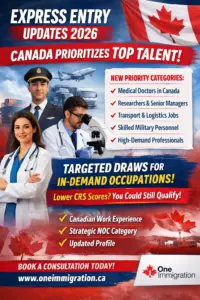
Express Entry 2026 Updates: Canada Introduces New Priority Immigration Categories
Express Entry 2026: Canada Introduces New Priority Categories to Attract Top Global Talent In February 2026, Immigration, Refugees and Citizenship Canada (IRCC) announced a significant