CRS Score Explained: How Many Points Do You REALLY Need in 2026?
If you’re planning to immigrate to Canada through Express Entry, you’ve probably asked yourself one critical question:
“What CRS score do I actually need in 2026?”
The honest answer is: it depends. But with the right strategy, understanding how the system works can save you years of waiting, thousands of dollars, and costly mistakes.
In this guide, One Immigration explains how the CRS score works, what scores are realistically competitive in 2026, and how qualified candidates can improve their chances.
Prefer listening instead of reading? Listen to our short podcast where we explain how CRS really works in 2026 and what scores are competitive. Click Here to Listen to our Podcast on Spotify
What Is the CRS Score?
The Comprehensive Ranking System (CRS) is the points-based system used by Canada to rank candidates in the Express Entry pool. Your CRS score determines whether you receive an Invitation to Apply (ITA) for permanent residence.
The higher your CRS score, the stronger your chances of being invited.
How CRS Points Are Calculated
Your CRS score is based on four main components:
1️⃣ Core Human Capital Factors
Age
Education level
English language proficiency
French language proficiency
Canadian work experience
2️⃣ Spouse or Partner Factors (if applicable)
Education
Language ability
Canadian work experience
3️⃣ Skill Transferability
Combination of education + language
Combination of foreign work experience + language
Combination of Canadian work experience + education
4️⃣ Additional Points
Provincial nomination (+600 points)
French-language proficiency
Canadian education
Valid job offer (in specific cases)
Sibling in Canada
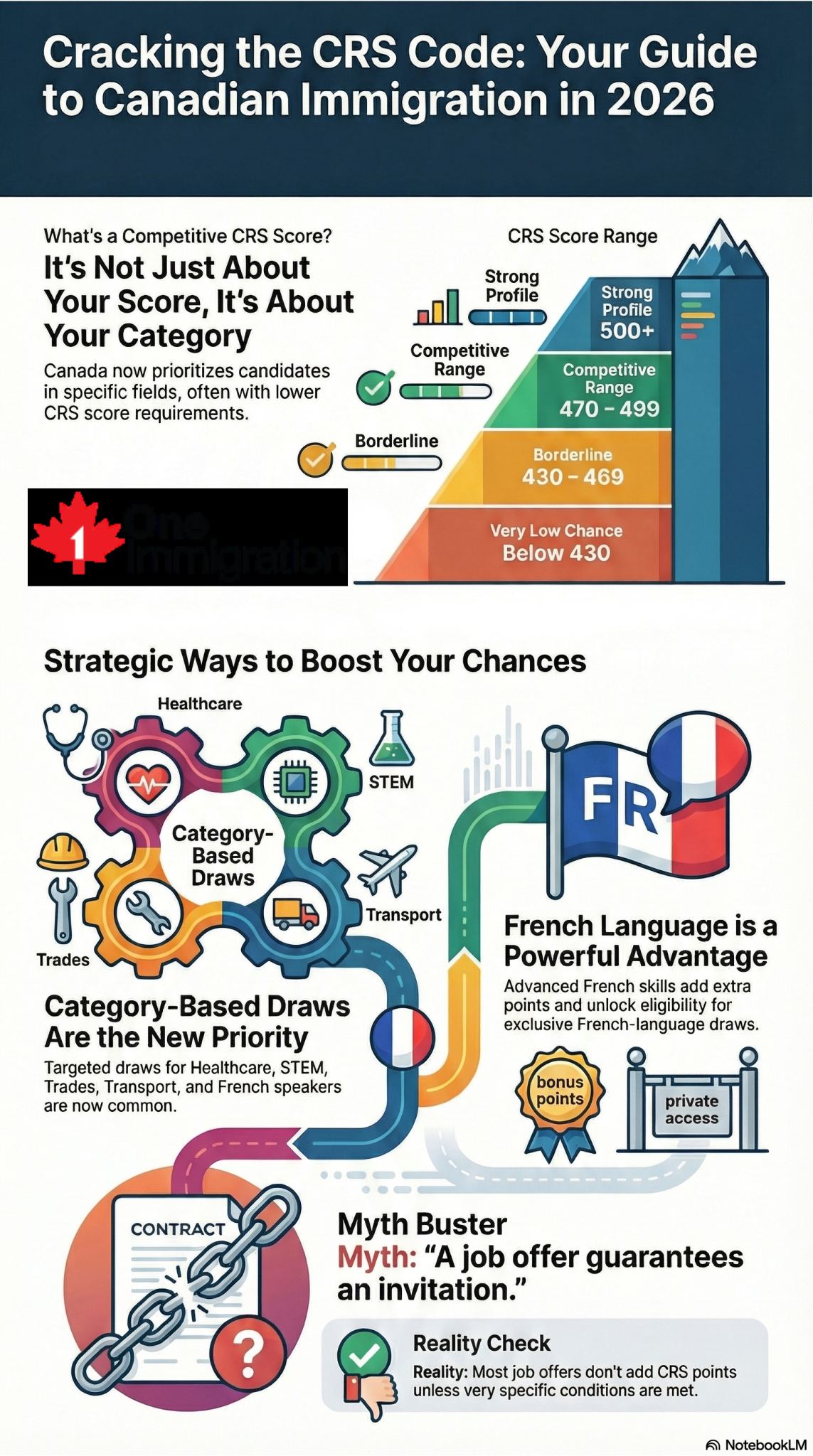
CRS Score Reality Check for 2026
Here’s what realistic CRS ranges look like based on current trends and category-based draws:
🔴 CRS Below 430
Very low chance under general Express Entry draws
May still qualify through provincial programs, employer pathways, or long-term planning strategies
🟠 CRS 430-469
Borderline competitiveness
Strongly depends on category-based draws (French, healthcare, trades, etc.)
Strategic improvements are usually required
🟡 CRS 470-499
Competitive range
Good chance under targeted category draws
Still not guaranteed under general draws
🟢 CRS 500+
Strong profile
High likelihood of receiving an ITA
Especially competitive in both general and category-based rounds
⚠️ Important: General draws are no longer the only path. Canada is increasingly relying on category-based selection, which changes the CRS dynamics significantly.
“For skilled professionals planning Canadian immigration in 2026.”
Why Category-Based Draws Matter in 2026
Canada now conducts targeted Express Entry draws for specific categories, such as:
French is one of the most powerful CRS boosters today.
With advanced French (CLB/NCLC 7+), you can benefit from:
Extra CRS points
Eligibility for French-language Express Entry draws
Access to Francophone provincial streams outside Quebec
Candidates with both English and French often outperform candidates with much higher scores but only one language.
Common CRS Myths (That Hurt Your Chances)
❌ “I just need to wait for my score to drop.” → CRS cut-offs fluctuate, but waiting without a strategy is risky.
❌ “A job offer guarantees PR.” → Most job offers do not add CRS points unless very specific conditions are met.
❌ “Express Entry is the only option.” → Many successful applicants combine Express Entry + provincial or employer strategies.
❌ “I can fix my profile later.” → Errors in work classification, language results, or education can make you ineligible, not just uncompetitive.
How to Increase Your CRS Score (Strategically)
Depending on your profile, the most effective strategies may include:
Improving English and/or French language scores
Adding French as a second language
Correctly aligning education and work experience
Targeting category-based Express Entry draws
Exploring Provincial Nominee Programs (PNPs)
Long-term planning (12–24 months) instead of rushed applications
There is no one-size-fits-all solution, strategy matters more than raw points.
Why a Professional CRS Assessment Matters
Online CRS calculators give you a number, but they don’t give you a strategy.
At One Immigration, we:
Calculate your true CRS competitiveness
Identify hidden eligibility risks
Match your profile to realistic pathways
Build a plan based on federal + provincial options
Help you avoid refusals and wasted time
Final Thoughts
In 2026, the question is no longer just “What is my CRS score?” but rather: “Am I positioned correctly for the draws Canada is actually running?”
With category-based selection, Francophone priorities, and provincial strategies, many candidates who understand the system are succeeding — even without perfect scores.
Not sure if your CRS score is enough? Before waiting or applying blindly, get a clear, professional assessment.
New Canadian Citizenship by Descent Rules: Could You Already Be a Canadian Citizen? Have a Canadian Parent, Grandparent or Canadian Ancestor? Canada’s Citizenship Laws
Canada’s Immigration Reform Bill C-12 Moves Toward Final Approval: What It Means for You Prefer listening instead of reading? Canada is closer than ever to
Canada Quietly Launches New TR-to-PR Pathway for 33,000 Temporary Workers Prefer listening instead of reading? Canada has quietly introduced a new Temporary Resident to Permanent
Canada Invites 5,500 Candidates in New French-Language Express Entry Draw Canada continues to prioritize French-speaking immigrants in its immigration strategy. On March 4, 2026, Immigration,
Express Entry 2026: Canada Introduces New Priority Categories to Attract Top Global Talent In February 2026, Immigration, Refugees and Citizenship Canada (IRCC) announced a significant